

How to find it
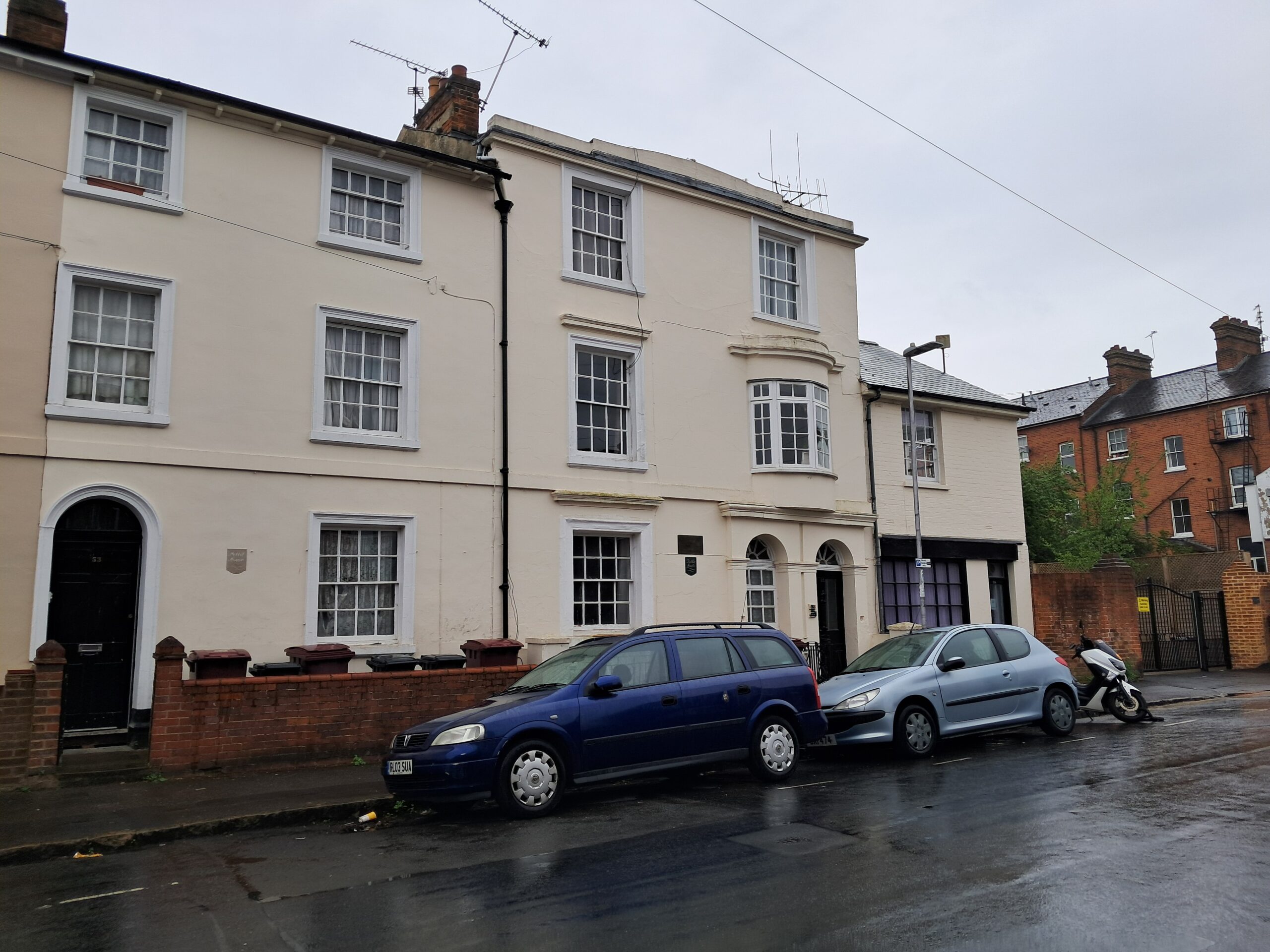
The brass plaque to William Henry Fox Talbot is at ground floor level on the wall of 55 Baker Street. There is also a plaque which states this is Talbot House.
The plaque marks that W H Fox Talbot conducted his Reading Establishment from this building 1844-1845. However the establishment ran until 1847.
After it closed the 53+55 became a school and St Mary’s Home for Friendless Girls. There is also a plaque on 53 Baker St. However, more of this below.
Background
William Henry Fox Talbot FRS FRSE FRSA (11 February 1800 – 17 September 1877) was an English scientist, inventor, and photography pioneer who invented the salted paper and calotype processes, precursors to photographic processes of the later 19th and 20th centuries.
He was born in Melbury House in Dorset and was the only child of William Davenport Talbot, of Lacock Abbey near Chippenham, Wiltshire, and his wife Lady Elizabeth Fox Strangways,
His personal lack of success at sketching led him to dream up a new machine with light sensitive paper, so he could make sketches automatically. When he went back to his home in Wiltshire, William started work on this new project. One of his earliest images is of a latticed window at Lacock Abbey, Wiltshire, in August 1835. A positive of this, from what may be the oldest existing camera negative, may be seen below. In 1839 he reported his art of photogenic drawings to the Royal Society. These “drawings” were a kind of early photograph, made using light sensitive paper.
In February 1841, Talbot obtained an English patent for his developed-out calotype process.
His work in the 1840s on photo-mechanical reproduction led to the creation of the photoglyphic engraving process, the precursor to photogravure. He was the holder of a controversial patent that affected the early development of commercial photography in Britain. He was also a noted photographer who contributed to the development of photography as an artistic medium.
His publication The Pencil of Nature (1844–1846), which was illustrated with original salted paper prints from his calotype negatives and made some important early photographs of Oxford, Paris, Reading and York.
He invented a process for creating reasonably light-fast and permanent photographs that was the first made available to the public; however, his was neither the first such process invented nor the first one publicly announced.
In 1844, Talbot helped set up an establishment in Russell Terrace (now 55 Baker Street) Reading for mass-producing salted paper prints from his calotype negatives. The Reading Establishment, as it was known, also offered services to the public, making prints from others’ negatives, copying artwork and documents, and taking portraits at its studio. Images below show Fox Talbot and photography work underway at the rear of 55 Baker Street.
Nicholas Henneman was a very important part of the Reading establishment. The Reading establishment was losing money and Talbot had plans to move the business to London where premises were found in December 1846. By autumn 1847 the establishment in Regent Street, “Sun Picture Rooms” was fully operational and the Reading Establishment was closed.
Further information go to the book Fox Talbot and the Reading Establishment by Martin Andrews. Published by Two Rivers Press 2014
More information
After the establishment closed, the building returned to being a school and in 1859 was “Terrace School”.
The 1893 Steven’s Directory identifies that nos 53 & 55 are the St Mary’s Home for Friendless girls, the Chaplain was Rev. Canon Garry and the Lady Superintendent was Sister Cordelia. It is understood this opened in 1872 and had 20 “inmates” and 5 staff. This continued to 1920 when it became two separate houses.
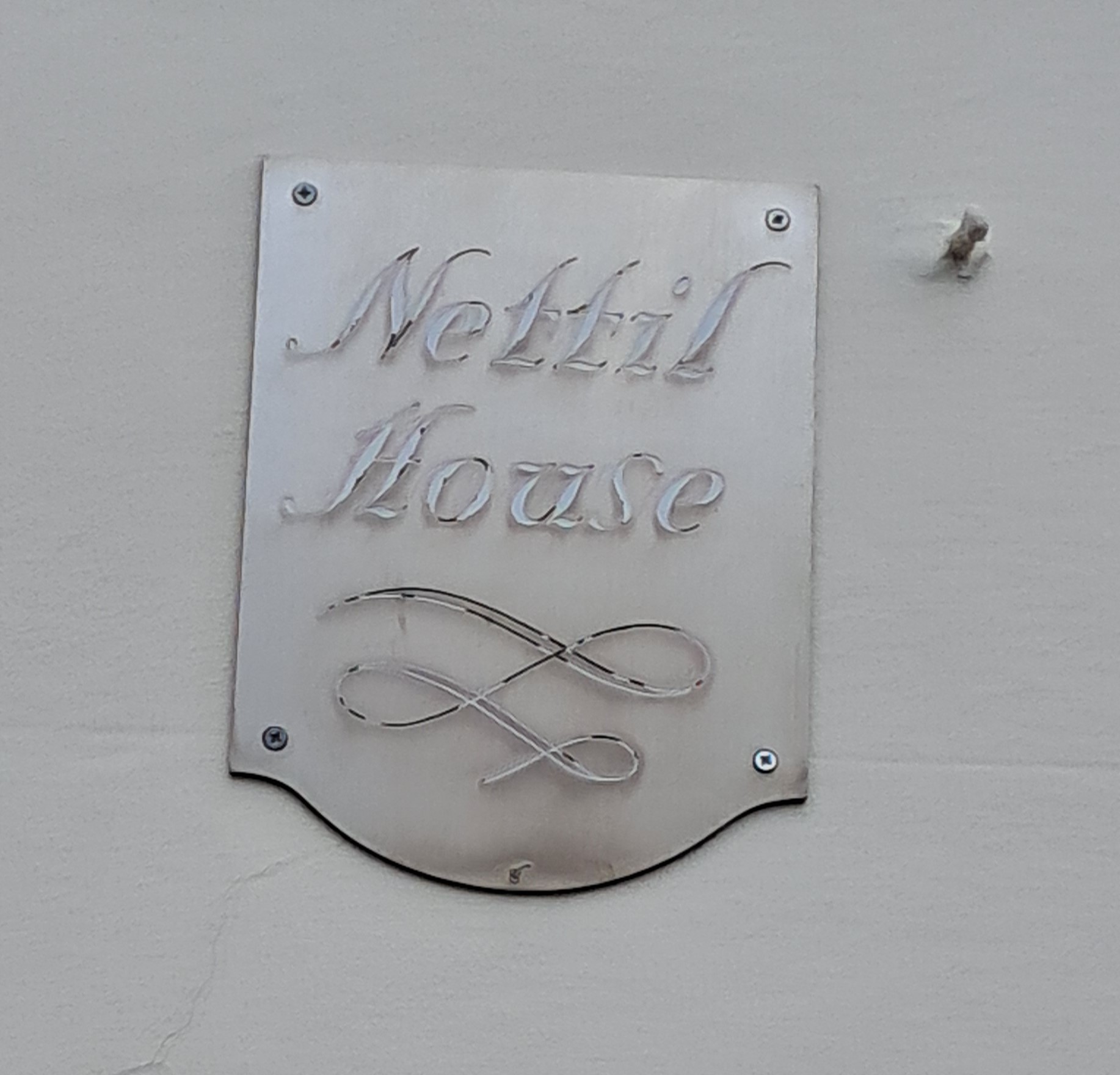
There is a plaque on no 53 “Nettil House”. This is Litten, the name of previous owners of 53-55 + 55A, backwards. In early 2025 work was underway to repair these three houses at the same time, perhaps the Litten family still own the 3 properties. Did they erect the Nettil, Talbot House and Fox Talbot plaques? We don’t know.

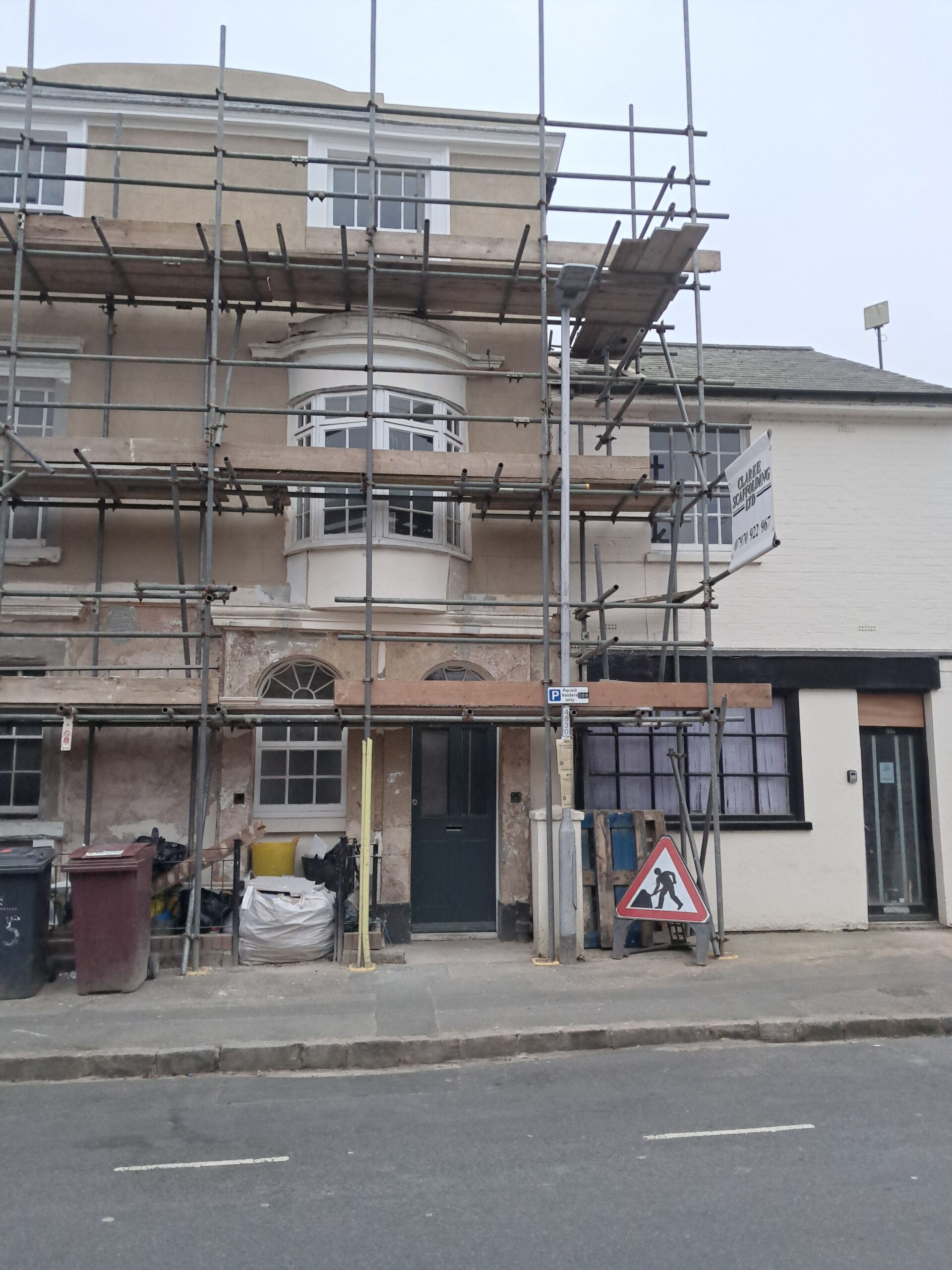
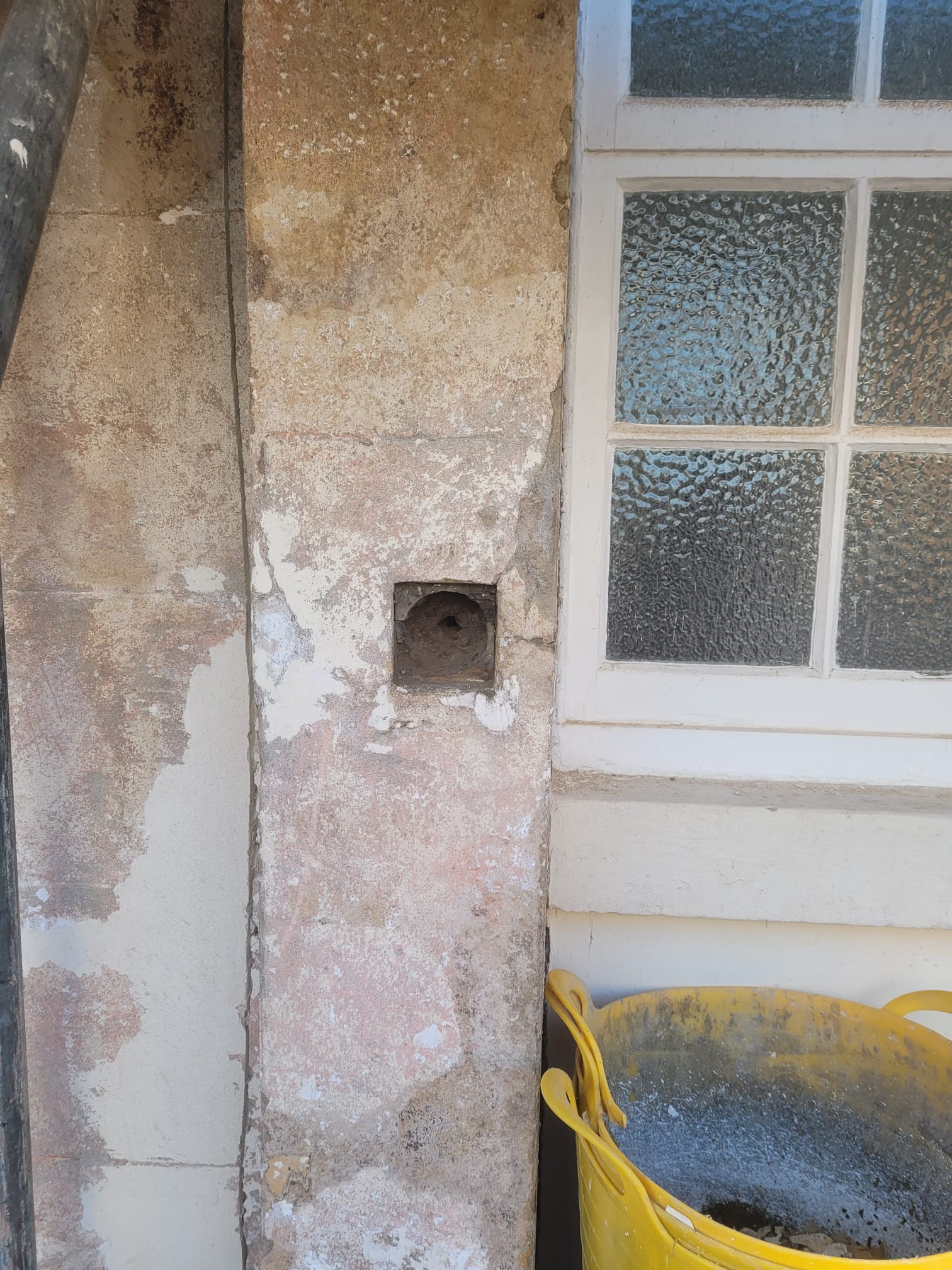
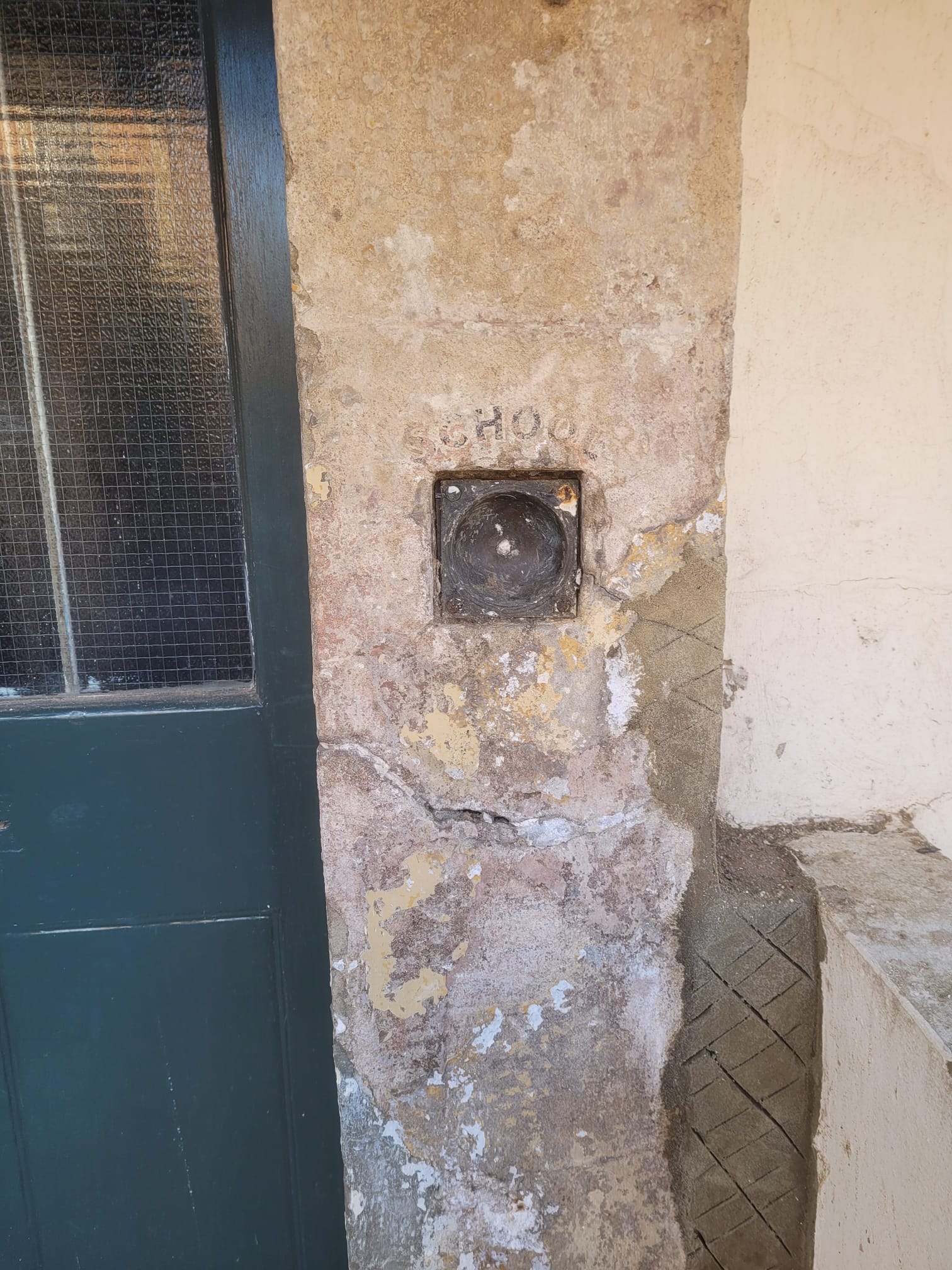
In December 2025 as part of the restoration works the old paintwork from the front of 55 was removed and work to restore the stucco commenced. it revealed, however, some text over the two door bell pulls. Below the bay window in the image below there were two doorways, whilst the one to the left is now blocked-in a bell pull may be seen to the left of the window. Above the bell to the left some of the letters for CHURCH can just be made out. Above the bell to the right of the remaining door SCHOOL may be clearly seen. The Conservation Area Advisory Committee has suggested to Reading Borough Council that as part of the Listed Building Consent an effort should be made to keep these texts visible.


Later use 55A was for many years been used as offices of a building company. In July 2025 a Civic Society member spotted several old ledgers, neatly handwritten, had been dumped by the railings to be disposed of. Being interested in old books she took them round to the Royal Berkshire Archive for their exploration.
The feedback from the RBA Senior Archivist is:
A large number of ledgers of work undertaken by the builders and decorators, R L Ash & Sons, of 6A Lorne Street, Reading, were recently saved by the Reading Civic Society. There were given to the Royal Berkshire Archives to look through and decide what would be worth keeping. After a thorough inspection of the ledgers it was decided not to keep the volumes themselves due to their poor condition and size. However, the ledgers had a large number of invoices and a smaller number of specifications pinned inside. These were protected by the volume and were generally in good condition. They also gave more detail about the jobs undertaken than was included in the ledgers so it was decided to keep a large sample to show the work of the company between the early 1950s and early 1970s.
The invoices show that they were mostly employed to undertake minor works including painting, general repairs, roof work, small electrical and plumbing jobs. Occasionally they also converted houses into flats. They mostly worked on houses for private individuals but were also employed by Wethered Brewery and later by the Ind Coope Brewery to do small jobs on many pubs in the Reading area, including several in Theale. They also undertook conversion work and repairs for local estate agents Haslams and worked on several projects for architects Charles Smith & Son, including on the Berkshire Club.
The saved records also included a ledger of rents received in 1970 and 1971 which covers many streets in Reading. It is not clear who the ledger belonged to and it is unlikely to have been R L Ash & Sons but it has been kept with the rest of the collection in case a link can be found in the future.’
Internet searches for R L Ash & Sons show they were in business from 1960 to December 2021 and were based here.